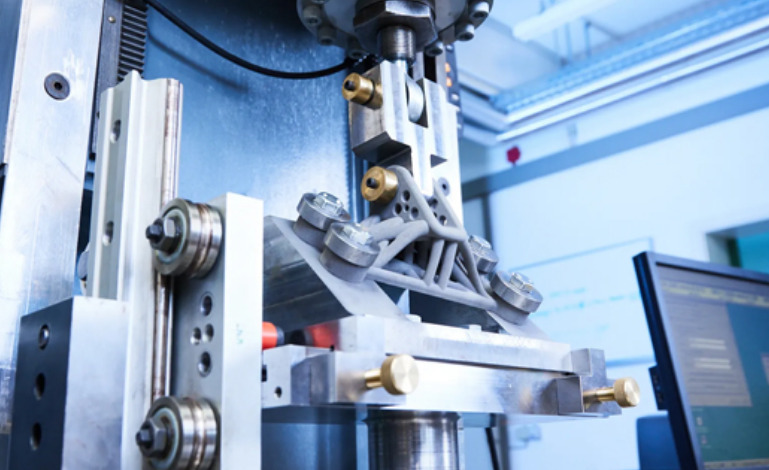
Researchers from the Fraunhofer Institute for Mechanics of Materials (IWM), Freiburg, Germany, have developed a model-based calculation chain for predicting the effects of mechanical surface post-processing on the fatigue performance of additively manufactured metal components, enabling engineers to select and optimise post-treatment strategies before physical testing.
Additively manufactured metal components offer significant design freedom and opportunities for customisation. However, their adoption in safety-critical sectors such as aerospace, automotive and energy has been limited by concerns over fatigue performance. Surface roughness, tensile residual stresses and process-induced defects, including gas porosity and lack-of-fusion defects, can act as crack initiation sites, leading to premature component failure.

Author: Andy Cormack