Renishaw, headquartered in Wotton-under-Edge, Gloucestershire, UK, reports it has been supporting aircraft maintenance provider Tronosjet Manufacturing based in Charlottetown, Prince Edward Island, Canada, to boost its Additive Manufacturing capabilities and achieve regulatory compliance for metal aerospace parts.
Renishaw has supplied multiple Laser Beam Powder Bed Fusion (PBF-LB) AM machines to Tronosjet, which the company uses to produce various aircraft components. These include a safety-critical engine thrust control pulley bracket – one of the first additively manufactured metal parts to be certified by the Federal Aviation Administration (FAA) under its Parts Manufacturer Approval (PMA) scheme.
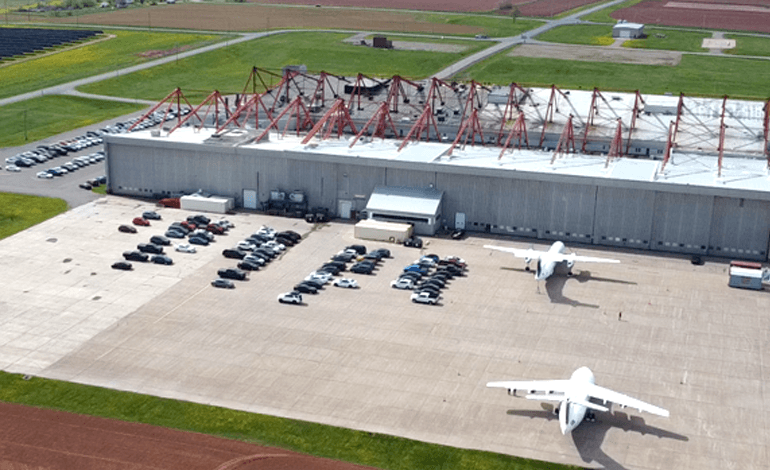
Founded in 2001, Tronosjet is anaircraft leasing, major modification and aircraft maintenance provider. Historically, the company has owned and managed a fleet of over 60 BAe 146/Avro RJ aircraft, along with engines and spare parts on behalf of third parties.
In 2016, the company founded its advanced manufacturing division, established to use Additive Manufacturing to produce a range of aerospace components for its customers. As part of its AM service, its team designs, manufactures, heat treats, post-processes and tests parts to deliver qualified components, along with the required certification data. Its manufacturing facility carries approval as an Aerospace Manufacturing Organisation under Transport Canada 561, along with AS9100 approval for design and development. These are industry-recognised standards for quality assurance and risk management for organisations in the aviation sector.
Although more manufacturers are starting to use AM to produce aerospace components, very few components have received regulatory approval from the FAA – preventing customers from using AM parts on aircraft. To demonstrate the capability of AM production, Tronosjet selected a BAe 146 part to substitute with an AM version – an engine thrust control pulley bracket which is conventionally cast from magnesium, a material that suffers from corrosion. The bracket holds a pulley, which redirects engine cables that travel from the cockpit to the pylon connecting the engine to the airframe. Statically, the bracket is usually loaded with 60-100 lbf of tension from the cable.

Author: Andy Cormack