AddMamBa, the BMWE-funded research project at the RWTH Aachen University Chair Digital Additive Production (DAP), is investigating how CO₂ emissions and resource consumption in the construction sector can be reduced with a focus on optimised, additively manufactured, and reusable facade brackets made from recycled steel. These components enable targeted reductions in material usage as well as thermal weak points.
According to the UN Global Construction Report 2024/25, approximately 34% of global energy-related CO₂ emissions and 32% of worldwide energy consumption are attributable to the construction sector. As a result, strategies focused on resource efficiency, circular economy approaches, and the reuse of construction materials are gaining importance in both research and industrial practice. Additive Manufacturing is regarded as a key enabling technology for economically utilising secondary raw materials while producing functionally optimised, material-efficient components.
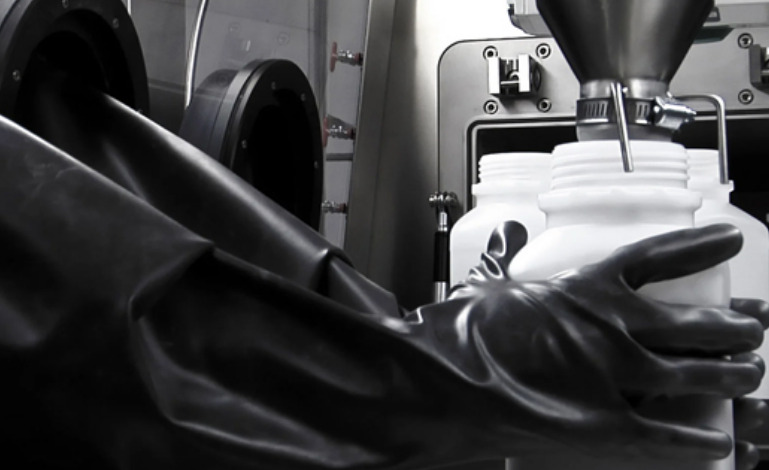
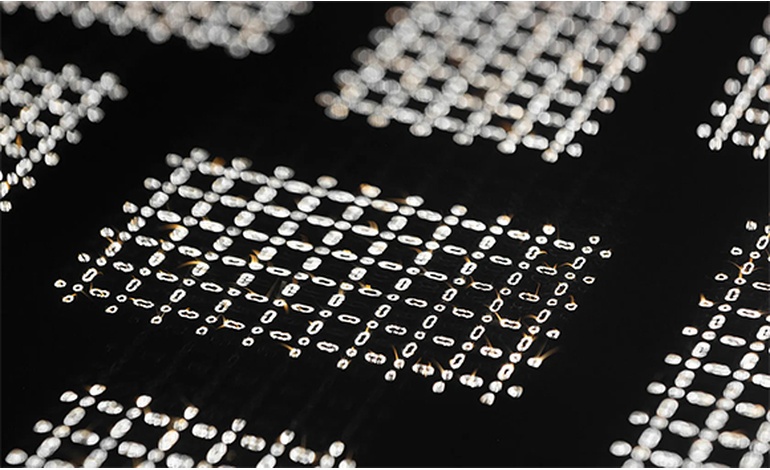
The research focuses on two types of components: facade brackets for ventilated facade systems (VHF) and connectors for load-bearing structures. As part of the project, these components are manufactured using Laser Beam Powder Bed Fusion (PBF-LB). The required metal powder is produced from steel scrap, which is first sorted by age, grade (e.g. reinforcing steel or structural beams), and condition, then analysed for its chemical composition. The powder is then produced using gas atomisation (VIGA). In a further step, the powder is sieved to obtain a particle size fraction of 15-45 micrometres that ensures a uniform layer build-up in the PBF-LB process.
This approach is intended to ensure that the recycled steel meets the quality requirements for load-bearing facade components.

Author: Andy Cormack