3DCeram Sinto, based in Bonnac-La-Côte, France, announced that it has successfully additively manufactured ultra-high-temperature ceramics (UHTCs) in partnership with ONERA – The French Aerospace Lab.
For over two decades, ONERA has been working with UHTC, developing advanced compositions and producing complex components which have been successfully tested both domestically and internationally. As the organisation aims to build increasingly complex geometries, it has begun exploring the use of Additive Manufacturing as a complementary technology.
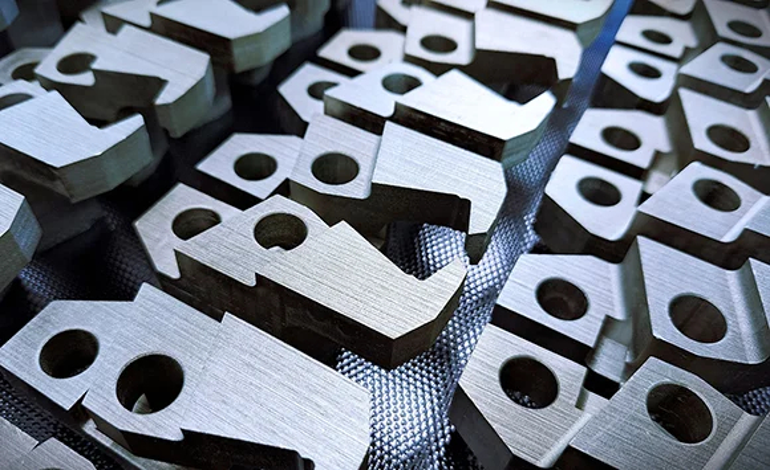
This led the company to contact 3DCeram Sinto, interested in assessing its Multi Advanced Technology (MAT) technology – which combines Fused Filament Fabrication (FFF), Material Extrusion (MEX) and machining – to produce components from specialised UHTCs like ZrB₂-SiC.
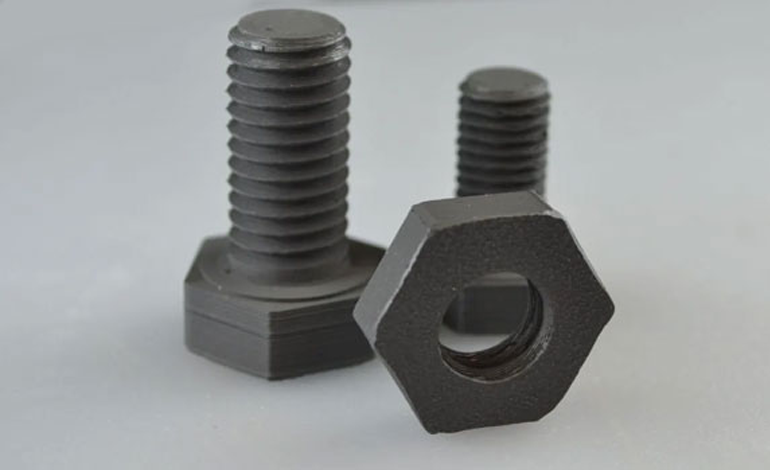
Using ZrB₂-SiC filaments from Nanoe, Ballainvilliers, 3DCeram Sinto successfully additively manufactured the test geometries provided by ONERA.
By combining the melting point and structural stability of zirconium diboride (ZrB₂) with the oxidation resistance and thermal conductivity of silicon carbide (SiC), the ZrB₂-SiC material family is engineered to withstand more extreme conditions than conventional ceramics and metals. As UHTCs more broadly gain momentum in the aerospace sector, 3DCeram Sinto noted that ZrB₂-SiC in particular may be relevant to applications such as thermal protection systems, leading edges, re-entry components, advanced propulsion parts and hypersonic structures.
“This joint effort combines ONERA’s deep materials expertise with our process capabilities, marking a meaningful step towards expanding the design possibilities for next-generation aerospace components,” 3DCeram stated. “This work represents an important milestone in making UHTCs compatible with future industrial and space-mission requirements.”

Author: Andy Cormack