Content kindly provided by Steven Moseley and Susanne Norgren
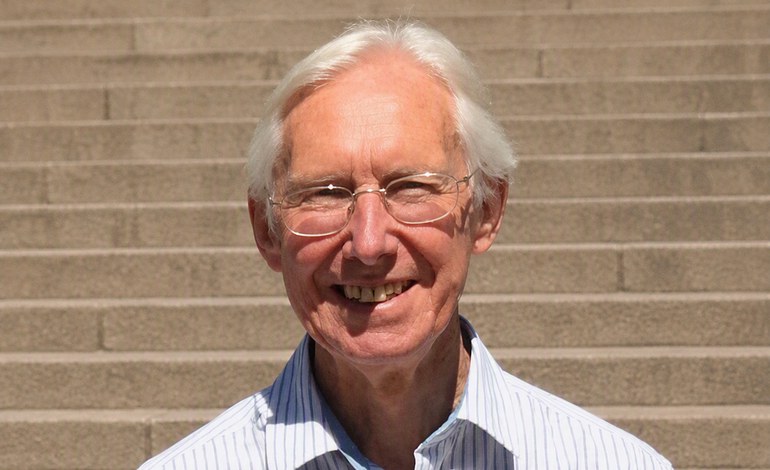
On the occasion of his retirement, colleagues and friends across the international hardmetal community would like to offer Bryan Roebuck our warmest thanks and appreciation.
For more than five decades at the National Physical Laboratory, Bryan has been one of the defining figures in our field — and, in a very real sense, one of its measures. He concluded his career as an Emeritus Senior Fellow in Materials Characterisation at NPL and became an internationally recognised authority on the metrology and properties of hardmetals and cemented carbides. His record of around 400 papers and NPL reports is remarkable, but those who know Bryan will understand that the numbers tell only part of the story. His greatest contribution has been to give the hardmetal community not only a substantial body of knowledge, but also a shared language of measurement that has helped researchers, laboratories and companies speak to one another with confidence.
Bryan’s influence can be seen in many of the methods and practices that are now part of everyday life in our field: the metallographic measurement of WC grain size, the measurement of Palmqvist toughness for hard and brittle materials, mechanical testing methods for hardmetals, and Electro-Thermal Mechanical Testing. Many of these developments were shared through NPL Good Practice Guides that have become familiar references in laboratories around the world. Behind many of them also stands work that carried through into international standards, reflecting Bryan’s long service representing the hard materials community on ISO TC 119. There, he led the development of many standards on which the powder metallurgy industry relies today. It is a rare career that changes not only what a field knows, but also how it agrees to find out.
Recognition followed through the Ivor Jenkins Award from the Institute of Materials, Minerals and Mining for his contributions to particulate engineering and service to the UK Powder Metallurgy Group, and the Distinguished Service Award from the European Powder Metallurgy Association, whose Hard Materials Sectoral Group he has continued to support and mentor. His influence has also been strongly international. He took part in a UK Overseas Science and Trade Mission to Japan with partners from the hardmetal industry, was invited to China as a world expert to deliver lectures organised by the Shanghai Research Institute of Materials, and initiated the regular European WINTEREV meetings, opening space for early-stage scientific exchange, discussion and friendship within the community.
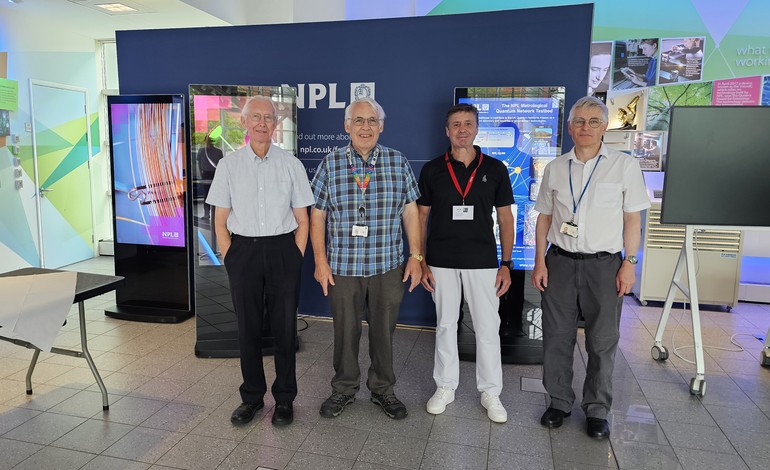
But the tribute would be incomplete if it spoke only of Bryan’s achievements. Those who have worked alongside him will remember an enthusiastic, patient and genuinely curious scientist; someone generous with his time, careful with his judgement, and unfailingly kind in the way he communicated with colleagues. He took questions seriously, encouraged others to think carefully about both data and method, and offered guidance in a way that combined authority with warmth. Many of us will remember not only what we learned from Bryan, but how he made scientific discussion feel thoughtful, open and worthwhile.
Bryan leaves the hardmetal community better equipped, with stronger scientific foundations, better measurement methods, and standards that will continue to support progress for many years to come. More personally, he leaves a community of colleagues who are grateful for his wisdom, integrity, encouragement and friendship.
Bryan, thank you for the science, for the standards, for the mentorship, and for the example you have set. We wish you every happiness in retirement and hope that your curiosity continues to find new subjects worthy of exploration.
A full bibliography of Bryan’s work can be found here: Bibliography

Author: Andy Cormack